Architectural Tactility (Fluted & Rippled Stone): Best Picks for 2026
Architectural tactility (fluted & rippled stone) is one of the most talked-about design directions of 2026, and the research backs it up: in a facade-preference model, surface complexity was the single most important factor for visual preference, recording a β weight of 0.72 — higher than colour, pr
Architectural tactility (fluted & rippled stone) is one of the most talked-about design directions of 2026, and the research backs it up: in a facade-preference model, surface complexity was the single most important factor for visual preference, recording a β weight of 0.72 — higher than colour, proportion, or material category alone. Whether you're planning a statement bathroom wall, a kitchen splashback with genuine depth, or an exterior cladding feature that stops people in their tracks, getting solid guidance on textured stone before you commit can save you thousands and steer you away from choices you'll regret.
Key Takeaways
- What is architectural tactility in stone? It refers to surface finishes, including fluted (parallel vertical or horizontal grooves), rippled (wave-like undulating relief), and reed profiles, that create physical and visual depth on a stone or porcelain tile surface.
- Best for fluted porcelain: The Palm Springs Porcelain Fluted is our first recommendation for bathrooms and feature walls.
- Best for reed mosaic texture: The Zen Marble Honed Reed Mosaic delivers natural stone character with a curated, rhythmic relief pattern.
- Porcelain vs. natural stone: Porcelain tiles offer consistent patterning and lower maintenance; natural stone tiles bring the irreplaceable depth and variation that manufactured tiles simply cannot replicate.
- Pricing advantage: We offer 5% below Ca'Pietra's main website RRP on all products, plus free delivery on qualifying orders.
- Always request samples: Tactile profiles read very differently at scale versus on screen. Ordering a sample before buying is non-negotiable with fluted and rippled finishes.
- Sealing matters: Natural stone tiles with relief profiles trap moisture in grooves. Always seal porous stone properly before grouting and after installation.
Why Architectural Tactility (Fluted & Rippled Stone) Is Dominating 2026
2026 marks a clear shift in how people think about tiles. They are no longer considered a purely functional material; they are the centrepiece of a room's design story.
Fluted and rippled stone finishes are the clearest expression of this shift. Where flat, polished surfaces dominated the past decade, designers and homeowners alike are now reaching for surfaces that cast shadow, invite touch, and give a room a sense of architecture rather than decoration.
The pattern in which tiles are laid changes the entire character of a room, and with tactile profiles, that effect is amplified significantly. A vertical fluted run on a bathroom wall reads entirely differently from the same tile set horizontally, or used as a half-height dado against a smooth plaster field above.
This is not a trend that will date quickly. Architectural tactility in stone draws from a long tradition of relief stonework in classical and modernist buildings alike, and the current resurgence is rooted in considered design rather than novelty.
Fluted & Rippled Stone: Porcelain Tiles vs. Natural Stone Tiles
One of the most common questions we get when clients come to us for home renovation tile advice on tactile finishes is: should I go for porcelain tiles or natural stone tiles? The answer depends on where you're installing, how much maintenance you're willing to take on, and how much natural variation you want.
Porcelain tiles manufactured with fluted or rippled profiles give you consistency. Every tile will have the same groove depth, the same spacing, and the same finish. That predictability makes them ideal for large-scale feature walls, commercial spaces, or anywhere you need the overall effect to be clean and repeatable without the variation of natural material.
Natural stone tiles bring a character and depth that manufactured tiles simply cannot replicate. A fluted marble or rippled quartzite surface will show the stone's natural veining, tonal movement, and unique crystalline structure running through each groove, which creates something genuinely bespoke. No two sections of a natural stone tactile wall will ever look exactly the same.
Both have their place. The key is understanding what you're asking the surface to do before you choose the material it's made from.
Our Best Picks for Architectural Tactility (Fluted & Rippled Stone)
We stock the full range of Ca'Pietra's tactile stone collection, and we've pulled together the strongest performers below. Every product we recommend here is available at 5% below Ca'Pietra's main website RRP, with free delivery on qualifying orders.
Palm Springs Porcelain Fluted (Best for Feature Walls and Bathrooms)
The Palm Springs Porcelain Fluted is our first recommendation for anyone entering architectural tactility for the first time. It delivers a refined, consistently grooved profile in a porcelain tile format, which means it's straightforward to cut, easy to install, and performs reliably in wet areas.
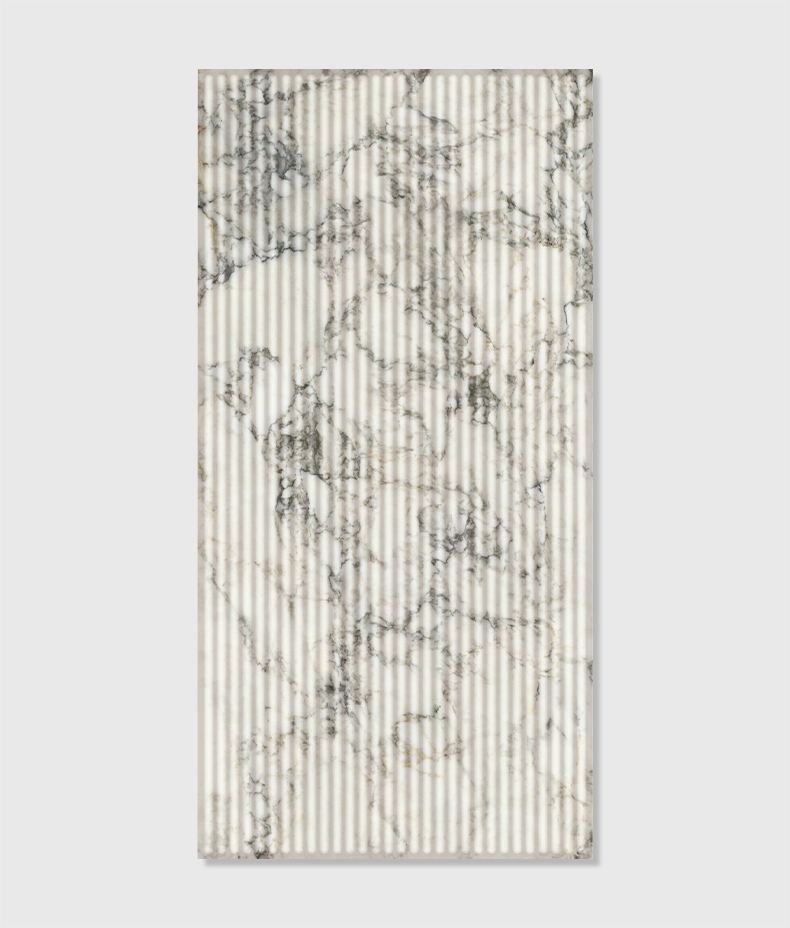
The fluted profile casts a gentle, directional shadow at different times of day, which makes the wall feel alive in a way a flat tile never could. It works beautifully in a walk-in shower enclosure, as a vanity splashback, or as a half-height feature behind a freestanding bath.
Because it's porcelain, the slip rating is appropriate for bathroom floors if installed with the correct grout joint width, and it requires no sealing. For clients who want architectural tactility (fluted & rippled stone) without the maintenance demands of natural stone, this is the practical choice.
Zen Marble Honed Reed Mosaic (Best for Texture with Natural Stone Character)
If you want the warmth and individuality of natural stone tiles in a tactile, reed-profile format, the Zen Marble Honed Reed Mosaic is exceptional. The reed profile gives a rhythmic, architectural repetition across the surface, while the marble's natural veining ensures no two sections read identically.

This is a surface that rewards close inspection. The interplay between the honed marble finish and the shadow geometry of each reed creates something genuinely curated rather than coordinated. It works as a shower niche insert, a furniture-scale feature panel, or a mosaic border running through a larger stone wall.
One practical note: the marble surface in the reed grooves needs careful sealing before grouting. We always recommend a quality impregnating sealer applied twice before installation, and a grout colour that doesn't visually compete with the stone's natural movement.
Lin Porcelain (Best for Subtle Ripple in Larger Formats)
The Lin Porcelain offers a softer ripple profile compared to the more defined geometry of fluted options. This makes it ideal for spaces where you want surface interest without the room feeling heavily textured throughout.
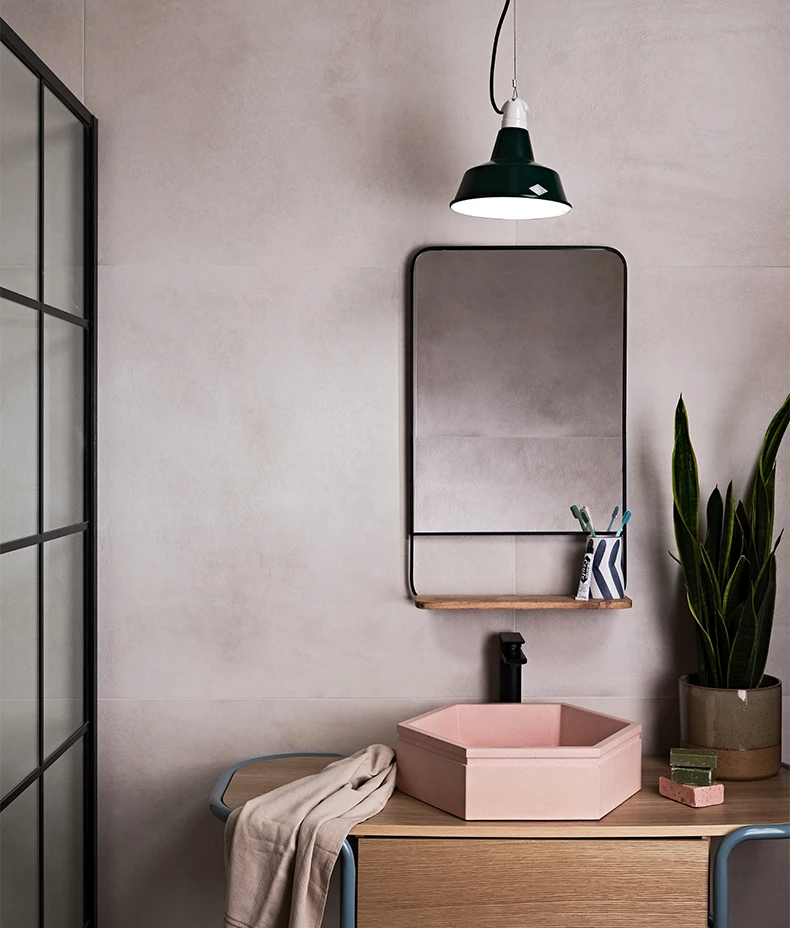
Porcelain tiles in the Lin range suit open-plan living areas, kitchen walls, and commercial reception environments where the tactile quality reads across a distance rather than at close quarters. The ripple is subtle enough to live alongside other materials without competing, but present enough to reward the eye as light conditions change through the day.
Venato Quartzite Slab (Best for Large-Scale Architectural Tactility)
For projects where architectural tactility (fluted & rippled stone) needs to work at genuine scale, the Venato Quartzite Slab is worth serious consideration. Quartzite is one of the hardest natural stone tiles available, which means it holds a machined fluted or rippled edge profile far more crisply than softer stones like limestone or travertine.
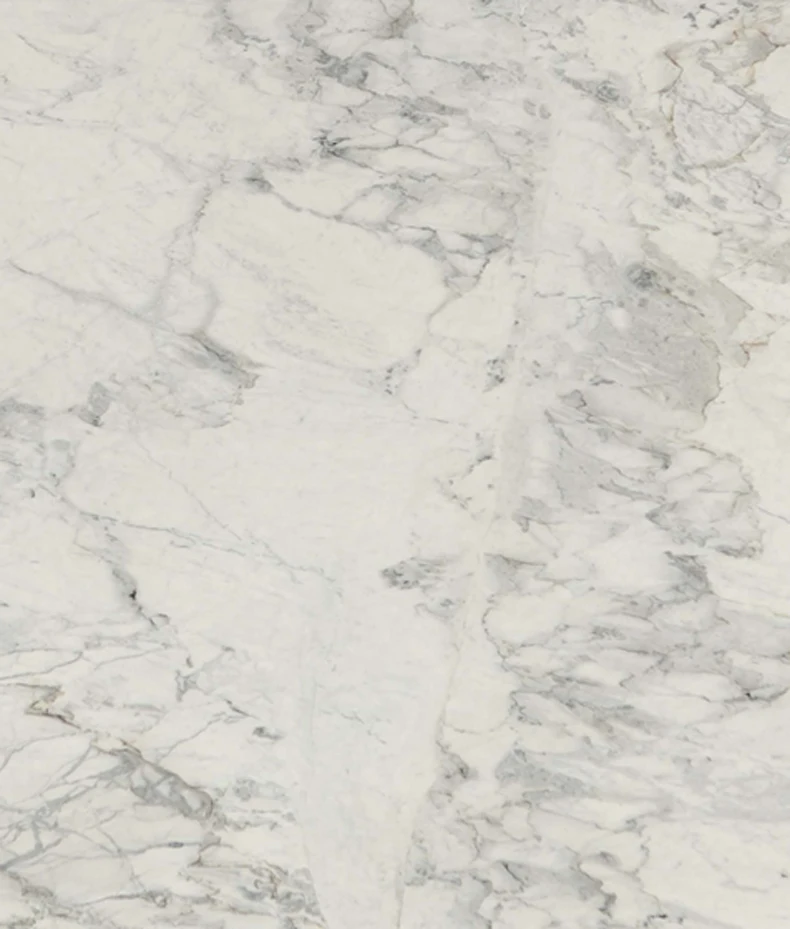
Slab-format natural stone also removes grout lines from the equation entirely, which lets the tactile relief of the surface read without interruption. This is particularly effective in bathroom wet walls, kitchen islands with waterfall edges, and exterior cladding applications.
Kendal Marble Tumbled Finish (Best for Softer, Aged Tactility)
Not all architectural tactility (fluted & rippled stone) comes from machined profiles. The Kendal Marble Tumbled Finish offers a different kind of surface depth, one that's organic and softened rather than linear and structured.

Tumbled marble has an authenticity to it that suits traditional, Mediterranean, and biophilic interior schemes particularly well. The surface variation across each tile means the overall installation has an aged, collected quality that feels genuinely at ease in period properties or spaces where a more rustic, natural feel is the goal.
Matravers Sandstone Tumbled Cobbles (Best for External Tactile Surfaces)
For outdoor applications where architectural tactility extends beyond internal walls, the Matravers Sandstone Tumbled Cobbles deliver natural surface variation underfoot. The tumbled finish gives each cobble a rounded, worn profile that provides grip and visual warmth simultaneously.
Sandstone's naturally slip-resistant qualities make this a practical choice for garden paths, courtyard surfaces, and external steps where both aesthetic and safety considerations are in play. Always check the slip rating against your specific installation gradient before specifying for steps or sloped surfaces.
How to Choose the Right Architectural Tactility Profile for Your Space
Most renovation mistakes happen before a single tile is laid. This is especially true with fluted and rippled stone, where the profile depth, direction, and scale all need to be matched to the room's proportions and light sources before you order.
Here's how we advise clients to approach it:
- Consider your light sources first. Tactile profiles read from shadow. A north-facing bathroom with limited natural light will show very little relief, regardless of how deep the fluting is. South-facing rooms with strong directional light will make even a subtle ripple feel dramatic.
- Match profile scale to room scale. Deep, wide fluting in a small shower enclosure can feel oppressive. Fine reed profiles in a large open-plan kitchen can disappear entirely. Scale matters as much as the profile itself.
- Think about grout carefully. Fluted profiles have more surface area and more linear joints than flat tiles. Grout colour selection becomes a design decision in itself. A matching grout will let the stone read as a continuous surface; a contrasting grout will emphasise the geometry of each groove.
- Always request samples. This is non-negotiable. Architectural tactility (fluted & rippled stone) looks completely different at tile scale versus the full-wall installation. Request samples from our full range and hold them against your walls at different times of day before committing.
- Factor in waste when calculating quantities. Relief profiles are more difficult to cut cleanly than flat tiles. We recommend ordering 15% additional material as standard, rather than the usual 10%, to account for profile losses at cuts and corners.
Architectural Tactility (Fluted & Rippled Stone) in the Kitchen
The kitchen is where tile trends in 2026 are most visible. Moody, saturated colours are having a genuine moment, and fluted and rippled stone finishes are appearing not just on splashbacks but on island cladding, hood surrounds, and larder niches.
In the kitchen context, capietra's fluted porcelain and natural stone tiles perform particularly well as a contrast material behind open shelving or as a full-height run behind a range cooker. The relief profile adds the architectural weight these focal-point areas deserve without requiring complex joinery or specialist fitting.
Choosing the right tile here means thinking about cleaning practicality alongside aesthetics. Deep fluting behind a hob will collect grease in the grooves over time. A shallower ripple profile, or a capietra porcelain tile with a sealed factory finish, is a more pragmatic choice in cooking zones.
Architectural Tactility (Fluted & Rippled Stone) in Bathrooms
Bathrooms are where architectural tactility most consistently delivers a return on investment, both in terms of how the space feels to use and how it reads to prospective buyers. A well-executed fluted or rippled stone wall in a bathroom signals a level of considered design that goes well beyond surface renovation.
Natural stone tiles in relief formats are particularly effective in wet room and curbless shower layouts. The textured surface aids grip, the natural variation in the stone creates a mineral, spa-like atmosphere, and the architectural rhythm of the relief profile gives the space a sense of enclosure and calm.
If you're using natural stone tiles in a shower environment, sealing is not optional. Relief profiles have a larger exposed surface area than flat tiles, and unsealed porous stone in a wet environment will stain and deteriorate quickly. We're always happy to help with advice on the right sealing products for your specific stone.
Why Buy Through Ca'Pietra Shaw Stone
Good home renovation tile advice isn't just about recommending a tile type. It's about making sure you buy the right material at the right price, with the right guidance on installation and aftercare.
We are an authorised partner of Ca'Pietra, which means we offer 5% below Ca'Pietra's main website RRP across the entire collection, including all fluted and rippled stone formats. We also offer free delivery on qualifying orders, so the saving goes further than the product price alone.
Choosing the right tile from the start, backed by expert guidance, is one of the smartest moves you can make during any renovation. We're here to support that process from first sample request through to final specification.
Browse the full collection at Ca'Pietra Shaw Stone or get in touch and we'll point you in the right direction for your specific project.
Conclusion
Architectural tactility (fluted & rippled stone) is the defining surface direction of 2026, and for good reason. Whether you choose porcelain tiles for their consistency and ease, or natural stone tiles for their irreplaceable depth and character, a textured relief surface brings a level of architectural presence to a room that no flat finish can match.
The products we've recommended here (Palm Springs Porcelain Fluted, Zen Marble Reed Mosaic, Lin Porcelain, Venato Quartzite, Kendal Marble Tumbled, and Matravers Sandstone Cobbles) represent the strongest picks across different applications, budgets, and installation environments within the Ca'Pietra range.
Remember: we offer 5% below Ca'Pietra's main website RRP on all products, with free delivery on qualifying orders. Request your samples, check your light sources, plan your grout colour, and allow the right waste calculation before you order. We're always happy to help if you need solid, practical advice before you buy.
Frequently Asked Questions
What is architectural tactility in fluted and rippled stone tiles?
Architectural tactility refers to surface finishes on stone or porcelain tiles that create physical and visual depth through relief profiles, including fluted grooves, rippled wave formations, and reed patterns. These profiles cast shadow, invite touch, and give a wall or floor a sense of three-dimensional structure rather than flat decoration.
Is fluted stone tile hard to keep clean?
Fluted stone tiles do require slightly more attention than flat tiles because the grooves can collect dust, grease, and moisture. In wet areas, sealed natural stone tiles perform well with regular maintenance; in cooking zones, a shallower profile or a factory-sealed porcelain tile is the more practical choice for everyday cleaning.
Can I use fluted porcelain tiles in a shower?
Yes. Fluted porcelain tiles are well-suited to shower environments because they're non-porous, require no sealing, and typically carry an appropriate slip rating for wet areas. Always confirm the slip rating specification for floor applications specifically, and use a grout joint width appropriate to the profile depth.
Is natural stone better than porcelain for a rippled tactile wall in 2026?
Neither is categorically better; they serve different design intentions. Natural stone tiles bring irreplaceable variation and depth that porcelain tiles simply cannot replicate, making them the choice for high-end, bespoke results. Porcelain tiles deliver consistent geometry, lower maintenance, and stronger performance in high-humidity environments, making them the practical first recommendation for most bathroom installs.
How much extra tile should I order for a fluted stone installation?
We recommend ordering 15% additional material for fluted and rippled stone profiles, compared to the standard 10% for flat tiles. Relief profiles are more difficult to cut cleanly, particularly at corners and niches, and profile losses at cuts are higher. It's always better to over-order from the same batch than to risk a dye-lot mismatch on a later top-up order.
Do I need to seal fluted natural stone tiles before grouting?
Yes, sealing before grouting is essential for porous natural stone tiles with relief profiles. The increased surface area of fluted and rippled finishes makes them more susceptible to grout staining in the grooves. Apply a quality impregnating sealer at least twice before grouting, and reapply after the grout has cured.
Where can I get Ca'Pietra fluted and rippled stone tiles at a discount in 2026?
As an authorised Ca'Pietra partner, Ca'Pietra Shaw Stone offers 5% below Ca'Pietra's main website RRP across the full tactile stone collection, including all fluted and rippled formats. Free delivery is also available on qualifying orders, making it the most cost-effective route to the full Ca'Pietra range.