How to Choose Best Limestone Tiles for Kitchen Floors: A Specialist's Guide for 2026
Learning how to choose the best limestone tiles for kitchen floors starts with one fact that surprises most homeowners: integrating limestone can lift property value by as much as 15% according to current market analytics. That is not a decorative detail. It is a structural investment in the most-us
Learning how to choose the best limestone tiles for kitchen floors starts with one fact that surprises most homeowners: integrating limestone can lift property value by as much as 15% according to current market analytics. That is not a decorative detail. It is a structural investment in the most-used room in the house.
As a Gold Ca'pietra Reseller and Authorised Showroom Partner, our team work with limestone every day, and we know the "right" choice is rarely about looks alone. Below, we walk you through the methodology we use to match the correct natural stone tiles to a working kitchen, finish by finish.
And before we go further, a practical note worth stating early. We offer a 5% discount below Ca'pietra's main website pricing on every product, plus free delivery on qualifying UK orders, so the specification advice below comes with partner pricing attached.
Key Takeaways: Choosing Limestone Tiles for Kitchen Floors
| Question | Quick Answer |
|---|---|
| What finish suits a kitchen floor? | Honed and tumbled finishes offer grip and disguise wear. Browse the full natural stone collection to compare. |
| Is limestone durable enough? | Yes, when sealed correctly. Limestone is a long-term material, not a fashion piece. |
| Limestone or porcelain tiles? | Limestone gives haptic warmth; porcelain gives near-zero maintenance. Both have a place. |
| Does sealing matter? | Critical. Sealing protects against kitchen spills, oils, and acids. |
| Should I order samples? | Always. See and feel the tile in your own home before you commit. |
| Where do I buy at the best price? | Through Shaw Stone, with 5% off Ca'pietra's main website pricing and free delivery on qualifying orders. |
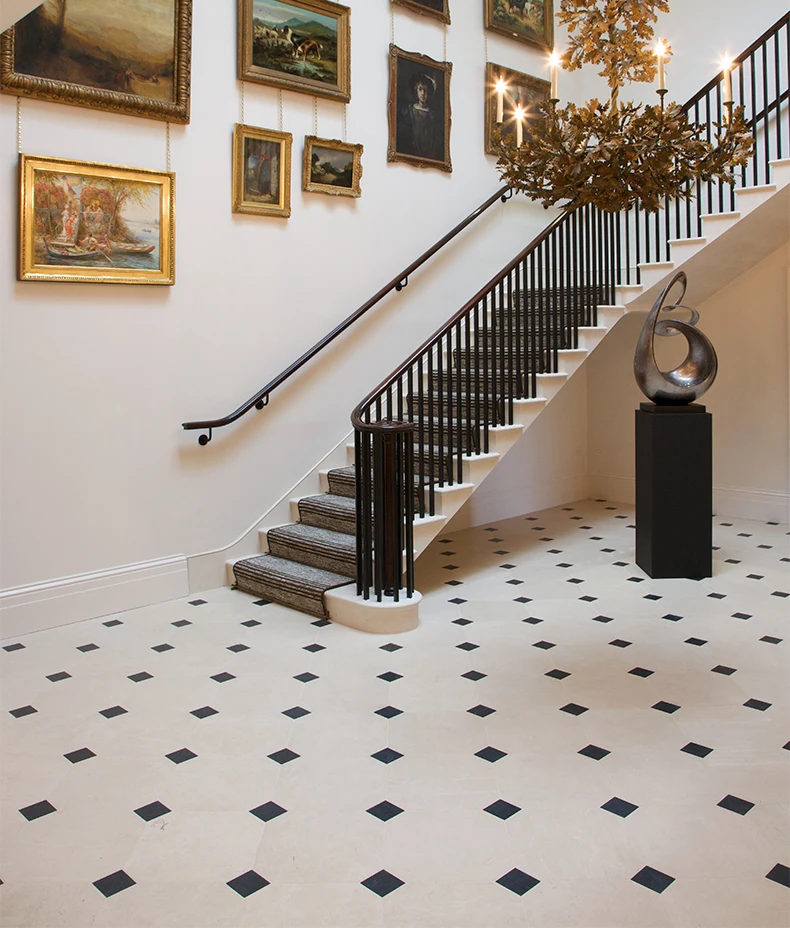
Why Limestone Works for Kitchen Floors
A kitchen floor takes more abuse than any surface in the home. Dropped pans, spilled wine, dragged stools, and constant foot traffic all test it daily.
Limestone answers that test with character. It carries a tonal depth and a haptic surface that engineered products struggle to imitate.
It is not just a floor covering, it is a material that develops a patina over years of use. That patina is the point. Where a synthetic floor simply wears, limestone matures.
Homeowners are noticing. A 2026 design shift has seen marble listings drop by 15 percent as limestone gains ground for its warmth and forgiving nature.
How to Choose the Best Limestone Tiles for Kitchen Floors by Finish
Finish is the single most important decision for a kitchen, more so than colour. The finish governs grip, cleaning, and how the floor ages.
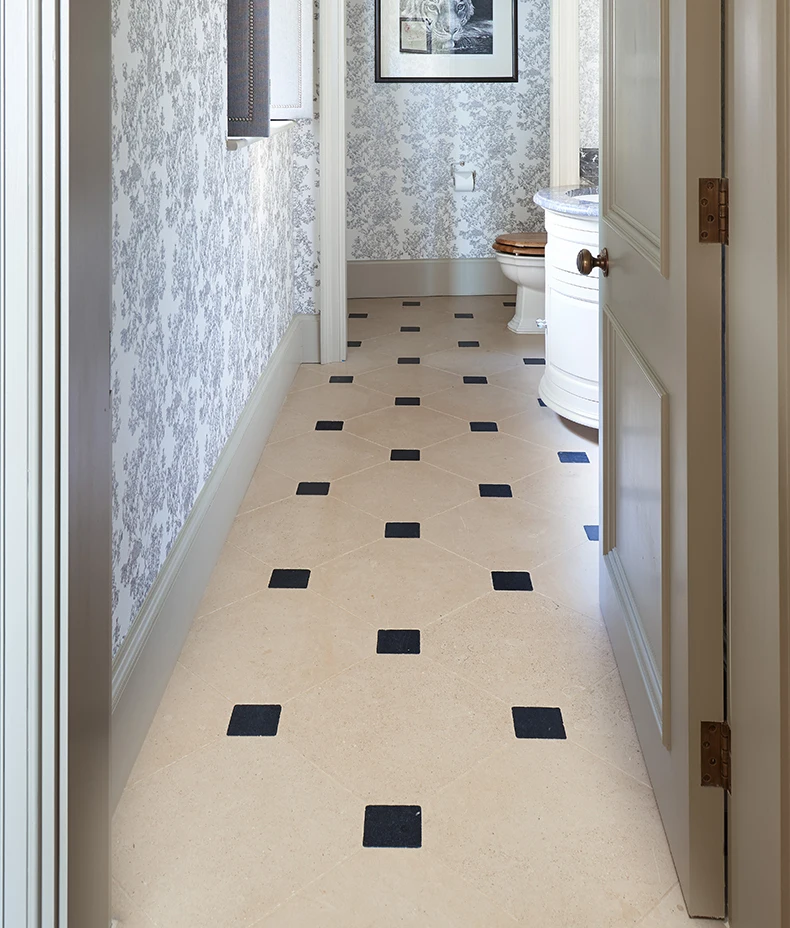
Here is how the Ca'pietra finishes break down for kitchen use.
- Honed: A smooth, matt surface with a refined look. The Portland Classic Limestone in a honed finish is a clean, pale option for bright, contemporary kitchens.
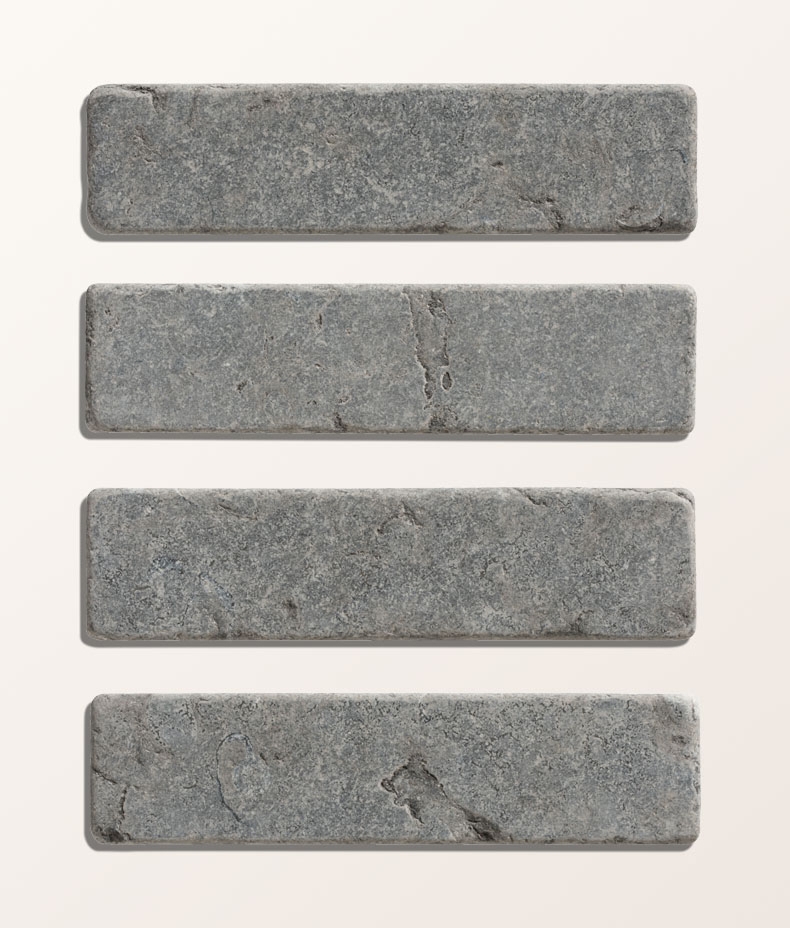
- Tumbled: Softened edges and a textured face that hides crumbs and minor wear. The Tora Blue Limestone in a tumbled finish brings a cooler, characterful tone.
- Seasoned: A worn, aged appearance that suits period and country kitchens. Both Aquitaine Limestone and Galway Limestone arrive in this seasoned finish.
- Velvet: A soft, tactile matt surface that sits between honed and tumbled. The Romaine Limestone Velvet Finish is a warm, understated choice.
For a busy family kitchen, we usually steer clients toward tumbled or seasoned. The texture works in your favour, disguising the daily life of a kitchen rather than broadcasting it.
How to Choose the Best Limestone Tiles for Kitchen Floors by Size and Format
Format changes the feel of a room before colour ever does. Large-format tiles read as calm and seamless; smaller stones read as detailed and traditional.
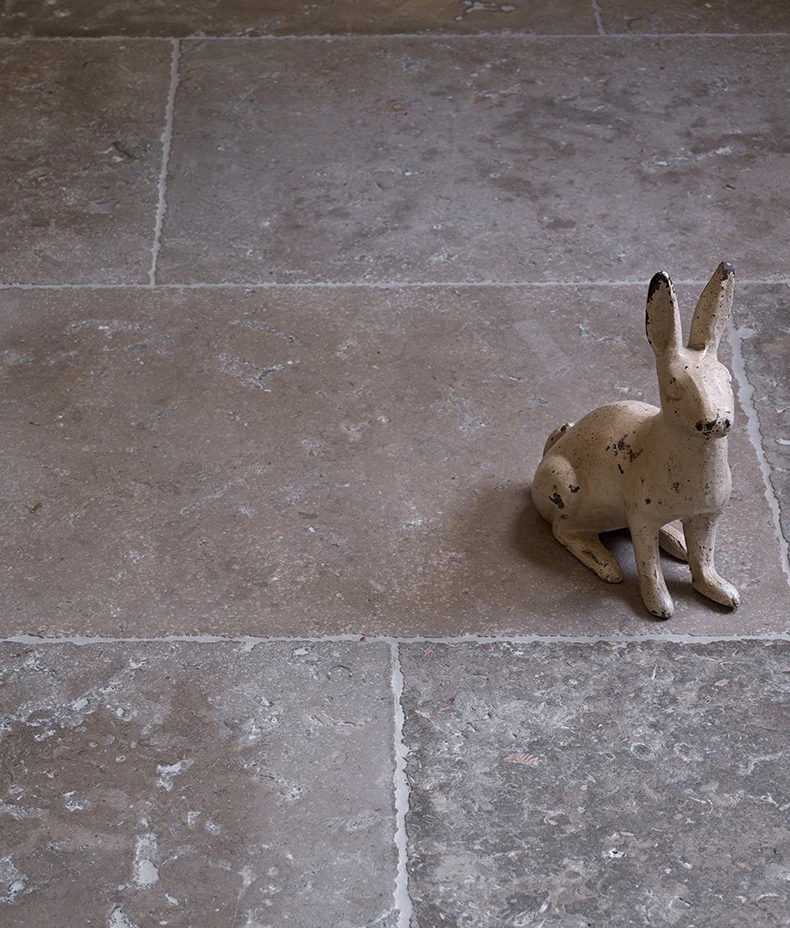
Demand confirms the direction. Sales data shows a 40% increase in demand for large-format tiles, prized for the uninterrupted look they give a kitchen floor.
If your kitchen is open-plan, larger formats reduce grout lines and visually expand the space. If you are working with a smaller galley kitchen, a tighter format or a klinker can add definition.
The Hazlebury Limestone Klinkers in a tumbled and etched finish are a strong example of a smaller, hardwearing format that suits both indoor floors and transition zones into the garden.
This is where our dry-lay process earns its place. Before a single tile is fixed, we lay the floor out loose to check tonal variation, format balance, and the flow of the room. It is not an optional step, it is the difference between a floor that feels composed and one that simply looks busy.
Limestone vs Porcelain Tiles for Kitchen Floors
This is the question we field most often. The honest answer is that both materials are valid, and the choice comes down to how you live.
Limestone gives you genuine natural stone tiles with depth, variation, and a surface that improves with age. Porcelain tiles give you a manufactured, near-zero-maintenance alternative that can convincingly mimic stone.
| Factor | Limestone | Porcelain Tiles |
|---|---|---|
| Character | Unique, tonal, develops patina | Consistent, repeatable |
| Maintenance | Requires sealing | Minimal, non-porous |
| Feel underfoot | Warm, haptic surface | Harder, more uniform |
| Outdoor flow | Use frost-resistant options | Frost-resistant as standard |
If you want a kitchen that runs out to a patio, porcelain tiles make the indoor-to-outdoor transition easier, since they are frost-resistant by design. We cover this in detail in our guide comparing natural stone versus porcelain for outdoor living.
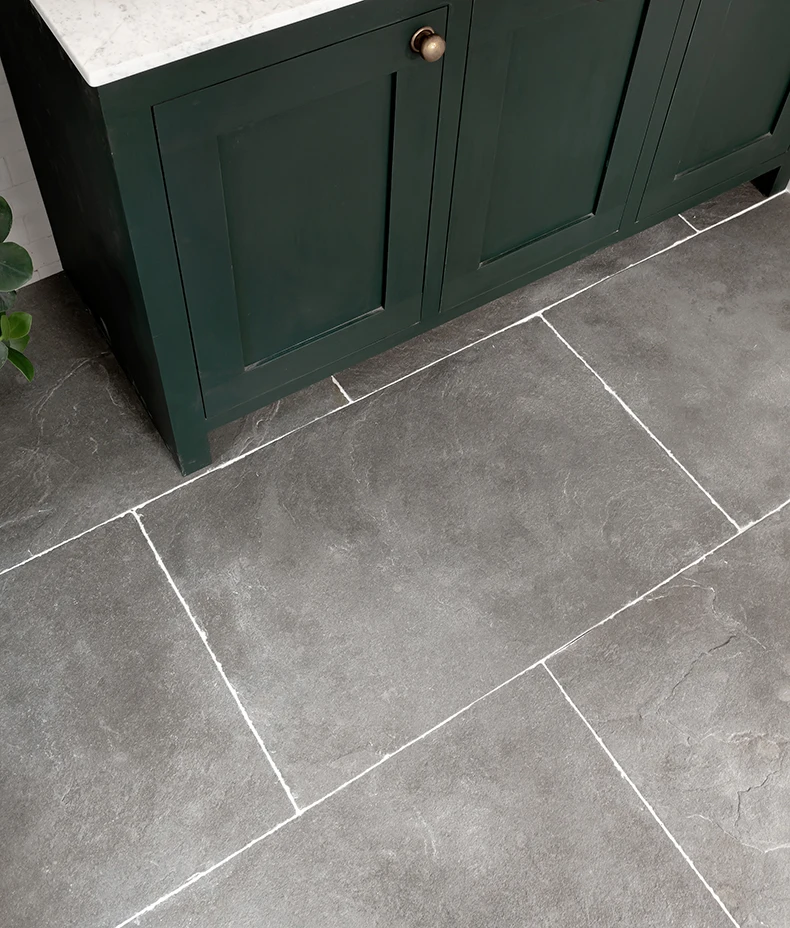
Sealing and Long-Term Care: The Step Most People Skip
A kitchen is an acidic, oily, high-spill environment. Lemon juice, vinegar, red wine, and olive oil are all part of normal cooking, and all of them attack unsealed limestone.
Sealing is therefore non-negotiable. We seal before grouting and again after, then recommend a periodic re-seal depending on traffic.
Cared for properly, limestone is not a short-term finish, it is a floor that outlives most kitchens fitted around it. The maintenance is light, but it must be consistent.
This is also why we always say: see and feel the tile in your own home before you commit. A sealed sample under your own kitchen lighting tells you more than any showroom photograph.
Colour and Tone: Reading the Light in Your Kitchen
Limestone tone should be chosen against your natural light, not against a mood board. North-facing kitchens benefit from warmer, paler stones to lift the space.
South-facing kitchens can carry cooler, deeper tones like Tora Blue without feeling cold. The trend data agrees, with 67% of consumers leaning toward earthy tones that complement natural light and indoor planting.
This earthy preference connects directly to the 2026 Pattern Splicing approach our team champion. Rather than covering a floor in a single repeating tile, the method splices complementary tones and formats together using precise ratios to produce a soulful layout.
The term "soulful" is not decorative language for its own sake. It describes a floor that carries character, something that looks as if it has been assembled with human judgment rather than automated repetition. You can read the full method in our Pattern Splicing layout guide.
Buying Limestone Tiles from Capietra: Pricing and Support
Specification is only half the job. Execution and pricing are the other half, and this is where our partner status matters.
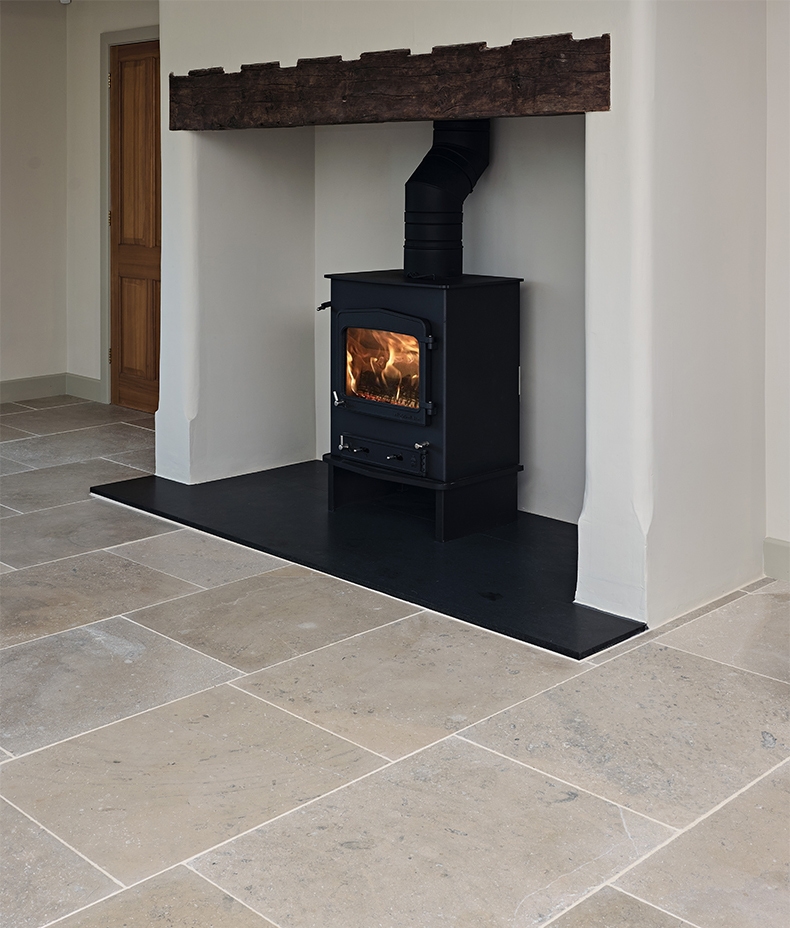
As a Gold Ca'pietra Reseller, we supply the full Capietra range at 5% below Ca'pietra's main website pricing, with free delivery on qualifying UK orders. The same partner pricing applies whether you choose Portland, Aquitaine, Galway, Charmot, or the Pimlico Limestone in a tumbled finish.
Our Fareham showroom lets you see and handle the tiles in person, while our nationwide delivery means you do not need to be in Hampshire to benefit.
Our team are stone specialists with years of experience in tile selection, installation, and project planning. Luxury isn't only about tile choice, it is about execution that tells a story.
Conclusion: Making the Right Limestone Choice
Knowing how to choose the best limestone tiles for kitchen floors comes down to discipline, not guesswork. Match the finish to your traffic, the format to your space, the tone to your light, and never skip the sealing.
Limestone rewards that care with a floor that ages into character rather than out of fashion. It is not a trend purchase, it is a long-term material decision.
When you are ready to choose the best limestone tiles for your kitchen floor, talk to our team for hands-on guidance, partner pricing at 5% below Ca'pietra's main website, and free delivery on qualifying orders. Browse the complete natural stone tiles range or visit us in Fareham to begin.
Frequently Asked Questions
What is the best limestone finish for a kitchen floor in 2026?
For most kitchens, a tumbled or seasoned finish is the best choice because the texture disguises crumbs, spills, and daily wear. Honed limestone suits brighter, contemporary kitchens where a smooth, refined surface is preferred.
Is limestone or porcelain better for kitchen floors?
Limestone gives you genuine natural stone tiles with warmth, depth, and a patina that improves over time, while porcelain tiles offer near-zero maintenance and frost resistance. The best choice depends on how much upkeep you want and whether the floor flows outdoors.
Do limestone kitchen floors need sealing?
Yes, sealing is essential for any limestone kitchen floor because the stone is porous and kitchens are full of acidic and oily spills. We seal before and after grouting and recommend a periodic re-seal based on traffic.
How much can limestone tiles add to my home value?
Current market analytics suggest limestone tiles can enhance property value by as much as 15%, making them a sound long-term investment. This is one reason limestone has overtaken marble in many 2026 renovation projects.
Where can I buy Capietra limestone tiles at a discount?
You can buy the full Capietra limestone range through Shaw Stone at 5% below Ca'pietra's main website pricing, with free delivery on qualifying UK orders. As a Gold Ca'pietra Reseller, we also offer showroom viewing in Fareham and nationwide delivery.
Should I order limestone samples before buying?
Always order samples first, because limestone tone and texture change dramatically under your own kitchen lighting. See and feel the tile in your own home before you commit to a full order.
What size limestone tiles work best for kitchen floors?
Large-format limestone tiles suit open-plan kitchens by reducing grout lines and creating a seamless look, which is why demand for them has risen 40%. Smaller formats and klinkers work better in compact galley kitchens where definition is wanted.