Compare Natural Stone vs Porcelain for Outdoor Living Areas: Which Works Best in 2026?
Choosing between natural stone and porcelain for your outdoor living area? We compare heat performance, frost resistance, slip safety, maintenance, and aesthetics to help you decide which works best for UK patios and gardens in 2026.
Compare Natural Stone vs Porcelain for Outdoor Living Areas: Which Works Best in 2026?
Compare Natural Stone vs Porcelain for Outdoor Living Areas with confidence, because heat and slip risk can make or break an outdoor surface. Natural stone surfaces like travertine and limestone measure 15–20°F (8–11°C) cooler than porcelain under identical direct sun exposure, which is a big deal for barefoot patios and playful family spaces in 2026.
Key Takeaways
| Decision point | Natural stone | Porcelain |
|---|---|---|
| Cold, comfort underfoot | Often cooler in direct sun, ideal for patios near pool edges. | Designed to stay stable and easy to live with, but can feel warmer on bright days. |
| Frost and water resistance (UK weather) | Works beautifully when chosen and sealed correctly, but needs mindful maintenance. | Very low water absorption helps it resist freeze-thaw stress. |
| Long-term upkeep | Typically benefits from sealing every 6–12 months. | Usually needs no sealing, just regular cleaning. |
| Slip safety (wet conditions) | Choose the right finish and get installation details right. | Rated options such as R11 support safer outdoor traction. |
| Aesthetic consistency | Natural variation is part of the charm. | Manufactured precision helps keep a uniform look across large areas. |
| Where to start shopping | Browse our Outdoor tile collection to compare outdoor-ready options, then visit our Fareham showroom to see samples in person. | |
- Porcelain tiles often win on low water absorption and simpler long-term maintenance for outdoor living areas in 2026.
- Natural stone tiles can feel cooler in direct sun and deliver unique, earthy character.
- For frost-heavy UK conditions, choose low-absorption performance, proper fixing, and a finish designed for outdoor use.
- For big-format modern layouts, trends in 2026 favour large-format porcelain with fewer visible joints.
- Planning matters: thickness, slip rating, and installation method matter as much as the material choice.
- We offer a 5% discount from Ca' Pietra's main website, plus free delivery for qualifying orders, so premium finishes can still fit real budgets.
Why people in 2026 are re-thinking outdoor floors
Outdoor living areas are no longer treated as an afterthought. In 2026, more homeowners want patios that feel comfortable underfoot, stay stable through British weather, and still look tailored years after installation.
That is exactly why Compare Natural Stone vs Porcelain for Outdoor Living Areas keeps coming up in conversations with designers and builders. The "right" choice is rarely about looks alone. It is about weather performance, long-term care, and how the surface behaves when it is wet, shaded, or fully sunlit.
At our Fareham-based showroom, we work across limestone, sandstone, marble, travertine, terracotta, and reformed stone, while also supplying outdoor-ready porcelain tiles for clients who want the look of stone with manufactured consistency. Whether you are choosing natural stone tiles for a traditional patio or exploring porcelain alternatives, the end goal is the same: honour aesthetics and utility together.
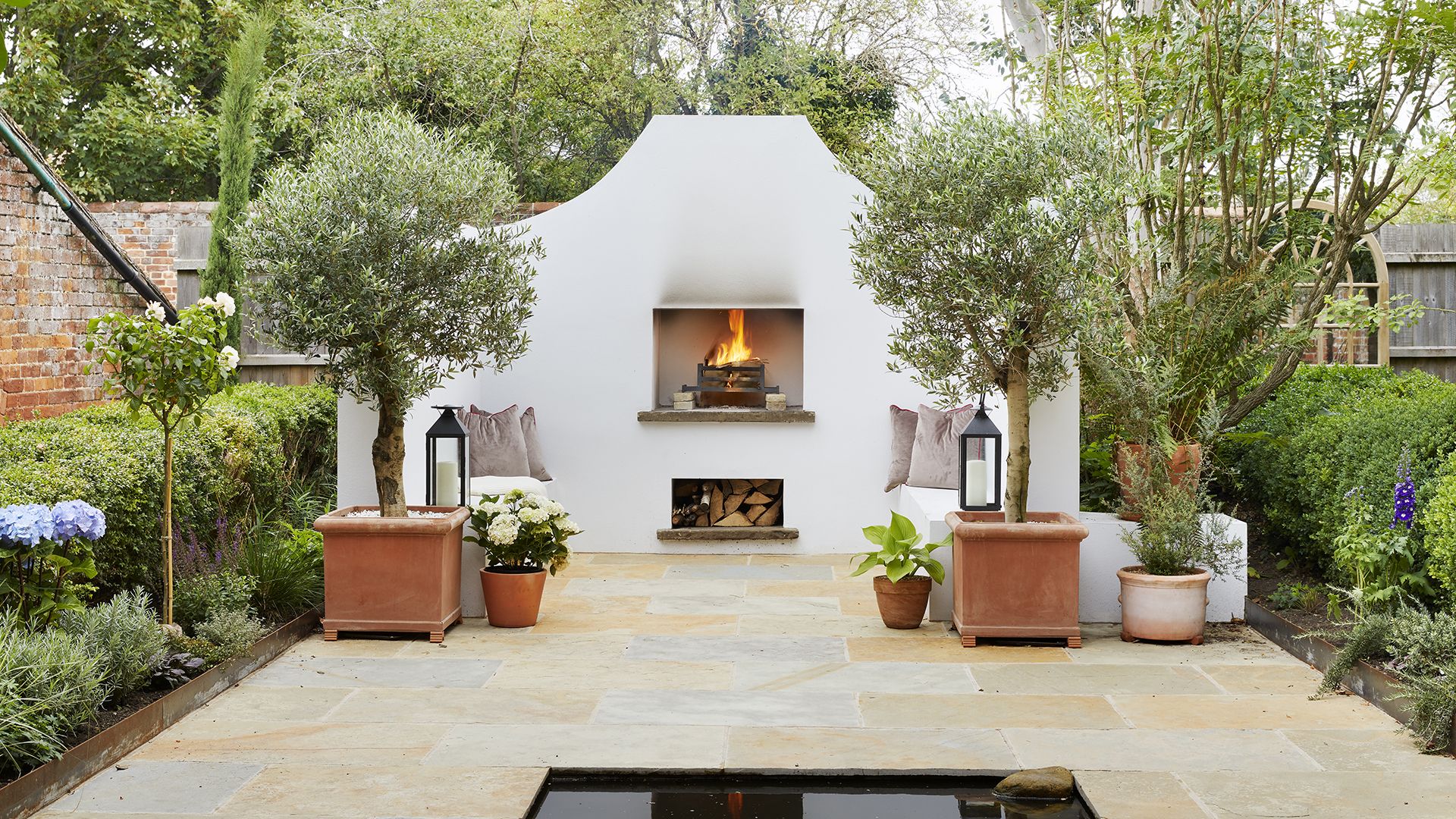
Natural stone tiles for outdoor spaces: beauty, character, and real-world care
Natural stone tiles are chosen because they look alive. Veining, tone variation, and surface texture can call to mind the cheerful feeling of a summer day, even before you step outside.
But stone is not one single behaviour. Limestone, sandstone, marble, and travertine each bring their own balance of hardness, porosity, and visual patterning. This is where our hybrid-specialist approach helps, because we pair Ca' Pietra's design-led collections with the stone fabrication knowledge of Shaw Stone.
What natural stone does well
- Underfoot comfort in bright sun: in direct conditions, natural stone surfaces can feel cooler than porcelain.
- Natural variation: small differences are not defects, they are part of the finished charm.
- Timeless colour stories: earthy palettes suit both classic and modern gardens.
The maintenance reality
Stone care is not complicated, it is simply regular. Natural stone typically requires sealing every 6–12 months to help manage water penetration and keep the surface performing as intended.
If you love the look of stone and you are prepared for periodic maintenance, natural stone can be an excellent long-term outdoor flooring choice in 2026. If you want lower ongoing effort, the comparison naturally tips towards porcelain.
Porcelain tiles outdoors: engineered performance with a stone-like look
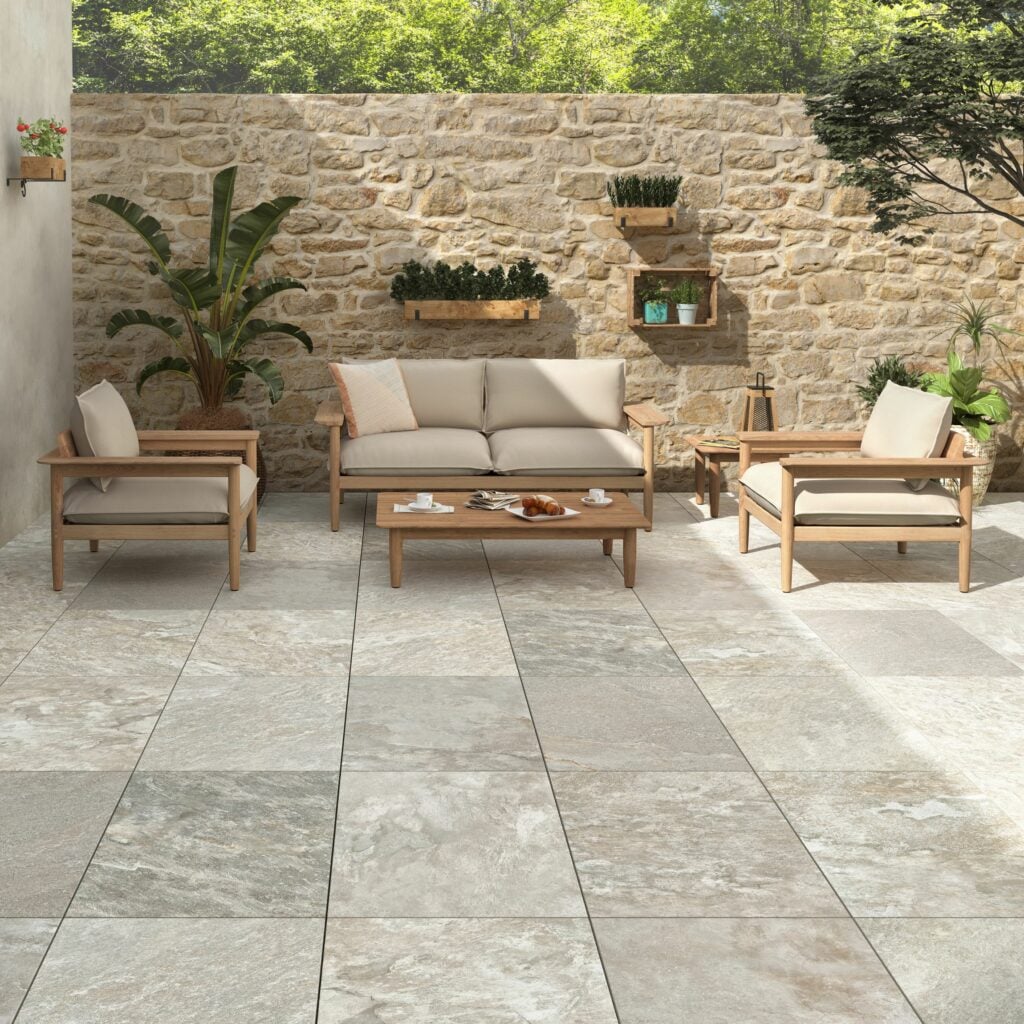
Porcelain tiles have become one of the most popular answers to "Compare Natural Stone vs Porcelain for Outdoor Living Areas" because they are designed as a stable outdoor material.
Many outdoor porcelain options are made with very low water absorption, which helps reduce the risks that come from trapped moisture during cold snaps. For British homes, that is the difference between a surface that looks good today and one that keeps its composure season after season.
Where porcelain often wins
- Frost resistance and water behaviour: low absorption means less freeze-thaw stress.
- Less sealing: porcelain typically requires no sealing throughout its lifespan.
- Consistency across large areas: manufactured precision supports a uniform look.
- Slip-conscious finishes: rated porcelain options support safer traction in wet conditions.
In 2026, homeowners also increasingly choose large-format layouts, because fewer grout lines can create a clean, architectural finish. That modern direction is one reason Compare Natural Stone vs Porcelain for Outdoor Living Areas often leads to porcelain for driveways, terrace zones, and open-plan outdoor extensions.
Did You Know? Porcelain tiles maintain a water absorption rate below 0.5% (often <0.1%), rendering them virtually frost-proof in climates with 100+ freeze-thaw cycles per year.
British climate performance: frost, water absorption, and slip safety
When we advise on outdoor flooring, we think in real weather terms: rain, foggy mornings, freeze-thaw days, and surfaces that stay wet longer than you expect.
Porcelain's very low absorption is why many homeowners prefer it for exterior areas where cold weather can drive moisture into the surface layer. Natural stone tiles can perform wonderfully too, but your outcome depends on the stone type, the finish, and consistent maintenance.
Slip safety is a materials decision, not an afterthought
For outdoor living areas, slip resistance matters most when the surface is wet. In 2026, rated porcelain finishes are a practical advantage for patios, steps, and access paths.
We also recommend you treat installation details as part of "material performance." A perfect tile choice paired with a poor fixing method is still a risk. Always use an outdoor-rated adhesive and follow the manufacturer's guidance on joint width and movement allowances.
Aesthetic comparison: which looks better in your garden?
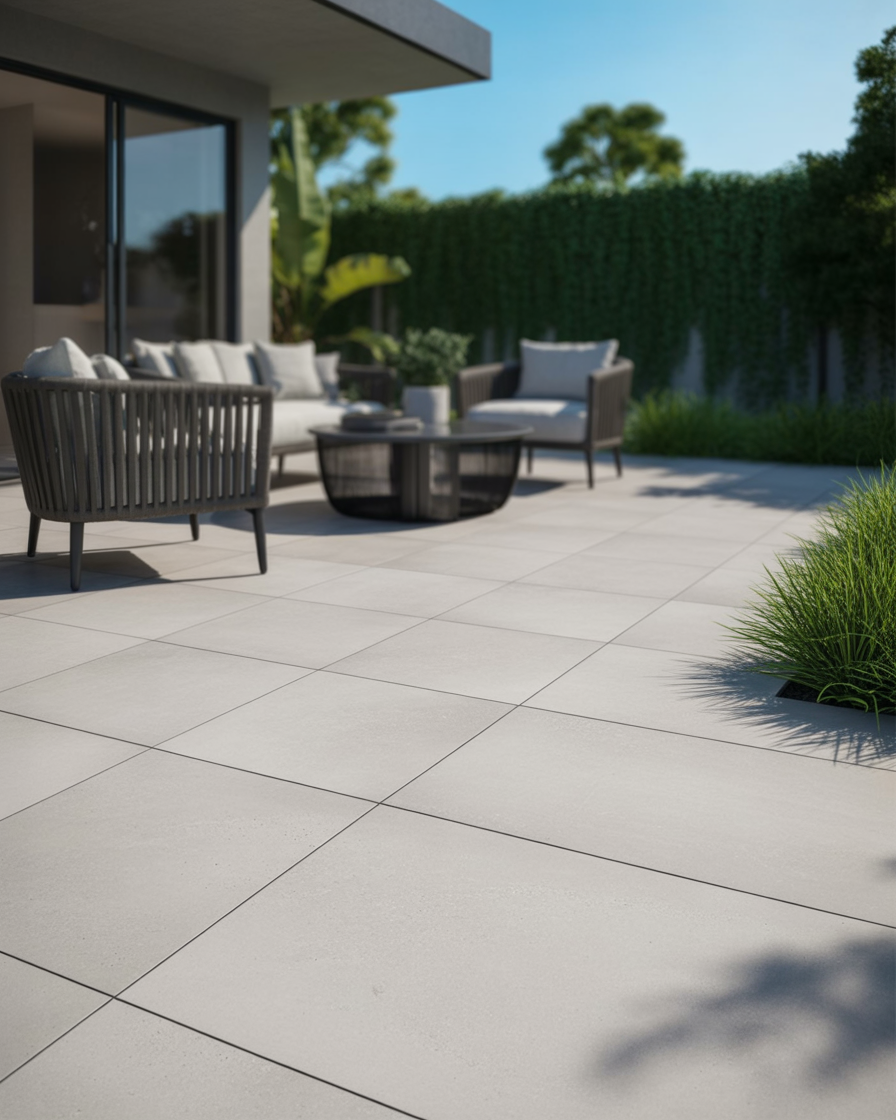
This is where personal taste matters most. Natural stone brings warmth, variation, and a connection to the natural world that manufactured tiles cannot fully replicate. Porcelain brings precision, colour consistency, and the ability to create large, seamless-looking surfaces.
Natural stone aesthetic strengths
- Each tile is unique — no two slabs look identical.
- Earthy tones age gracefully and develop a patina over time.
- Works beautifully with traditional and contemporary garden styles.
- Pairs well with natural materials like timber, brick, and planted borders.
Porcelain aesthetic strengths
- Consistent colour and pattern across large areas.
- Available in stone-effect, concrete-effect, and wood-effect finishes.
- Large-format options (600×600mm and above) create a sleek, modern look.
- Colour stays stable over time with minimal fading.
Cost comparison: what should you budget in 2026?
Both natural stone and porcelain span a wide price range. Entry-level porcelain can be very competitively priced, while premium stone-effect porcelain in large formats can cost as much as mid-range natural stone.
At Shaw Stone, we supply Ca' Pietra tiles at a 5% discount from Ca' Pietra's own website price, with free delivery on qualifying orders. This means you can access premium outdoor tile collections — both natural stone and porcelain — without paying full retail price.
When budgeting, remember to factor in:
- The cost of outdoor-rated adhesive and grout
- Sealing products (for natural stone)
- Any groundwork or sub-base preparation
- Professional installation if you are not laying the tiles yourself
Our recommendation: how to choose between natural stone and porcelain for outdoor use
There is no single right answer when you Compare Natural Stone vs Porcelain for Outdoor Living Areas. The best choice depends on your priorities:
| Choose natural stone if… | Choose porcelain if… |
|---|---|
| You love natural variation and earthy character | You want minimal long-term maintenance |
| You are happy to seal periodically | You need consistent colour across a large area |
| Your garden has a traditional or rustic aesthetic | You want maximum frost resistance for UK winters |
| You want a surface that feels cooler underfoot in summer | You prefer a modern, large-format look with fewer joints |
Not sure which direction to take? Visit our outdoor tile collection to browse both natural stone and porcelain options side by side, or come into our Fareham showroom where our team can show you real samples and help you make the right choice for your project.